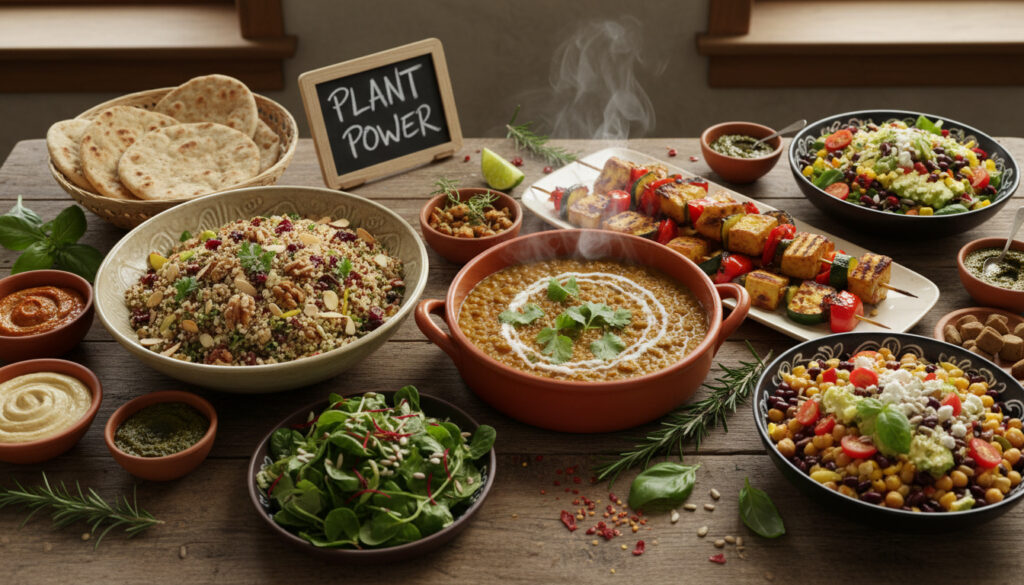
High Protein Vegetarian Meals – Best Foods and Recipes
High-protein vegetarian meals have evolved from niche dietary choices to mainstream nutrition strategies, delivering 20 to 30 grams of protein per serving through strategic combinations of eggs, dairy, legumes, and ancient grains. Lacto-ovo approaches exclude meat while emphasizing nutrient density, offering complete amino acid profiles when properly paired.
Understanding protein quality scores and portion sizes enables vegetarians to meet athletic and weight loss goals without reliance on soy products. From quinoa power bowls to paneer-based curries, these meals demonstrate that plant-forward eating can satisfy rigorous macronutrient demands.
What Are the Best High-Protein Vegetarian Foods?
Plus folate, iron, potassium
Complete protein source
PDCAAS score near 1.0
Boosts meals to 20-44g
Key Insights on Vegetarian Protein
- Lentils provide 23g protein per 100g dry weight alongside essential minerals like iron and folate.
- Quinoa functions as a complete protein with a PDCAAS score comparable to animal products.
- Eggs increase total meal protein content to between 20g and 44g when added to grain bases.
- Dairy options including Greek yogurt, ricotta, and paneer supply 20-27g protein per serving.
- Combining legumes with dairy or grains creates full amino acid profiles rivaling meat quality.
- Chickpeas and black beans deliver 15-20g protein per cooked cup with substantial fiber content.
- Mung beans offer 19g protein per serving with versatility in Asian and Indian preparations.
| Food | Protein (g/serving) | Calories | Notes |
|---|---|---|---|
| Lentils (100g dry) | 23 | ~340 | High folate, iron, potassium |
| Quinoa (100g) | 14 | ~120 | Complete protein, PDCAAS ~1.0 |
| Chickpeas (1 cup cooked) | 15-19 | ~270 | Rich in manganese for bone health |
| Black Beans (1 cup cooked) | 15-20 | ~230 | High fiber content |
| Greek Yogurt (1 cup) | 20 | ~130 | Complete protein source |
| Paneer (1 serving) | 20-27 | ~350 | Common in Indian cuisine |
| Eggs (1 large) | 6 | ~70 | Versatile meal booster |
| Mung Beans (1 serving) | 19 | ~212 | Pairs well with rice |
Easy High-Protein Vegetarian Meal Recipes
Breakfast Options
Oatmeal preparations with peanut butter, flax seeds, and hemp seeds provide 16g protein at approximately 458 calories. Adding Greek yogurt or a fried egg on quinoa creates morning meals reaching 25g protein while maintaining moderate caloric density.
Lunch and Dinner Bowls
Stuffed zucchini with ricotta and sundried tomato delivers 20g protein at roughly 450 calories. Indian-style chickpea curry provides 19g protein with high fiber content, supporting satiety through complex carbohydrates and minimal fat.
Quick Snacks
Greek yogurt parfaits layered with seeds and fruit contain 25-27g protein at 250-350 calories. Halloumi and chickpea salads offer 24g protein per serving, ideal for afternoon energy maintenance without excessive caloric load.
Combining legumes like lentils or chickpeas with dairy or eggs improves overall protein quality beyond what either provides alone, creating a complete amino acid profile comparable to chicken or beef.
How Much Protein Do Vegetarians Really Need?
Baseline Daily Requirements
General populations require 0.8g protein per kilogram of body weight daily according to established nutritional guidelines. A 70kg individual needs approximately 56g daily minimum from varied sources.
Active Lifestyle Adjustments
Athletes and those pursuing weight loss benefit from 1.6g per kilogram, effectively doubling baseline requirements. This translates to 98-100g daily for a 60-70kg individual, achievable through whole foods without reliance on supplements.
Complete vs. Incomplete Proteins
Protein quality varies significantly among vegetarian sources. Research indicates that quinoa and eggs score highest on the PDCAAS scale near 1.0. Legumes remain incomplete individually but achieve full amino acid coverage when combined with grains or dairy throughout the day.
High-Protein Vegetarian Meal Prep and Weight Loss Tips
Distributing 20-30g protein per meal supports muscle retention and satiety during caloric deficits. Batch cooking strategies involving farro chili or vegetable lasagna yield 22-28g protein per portion, remaining viable in refrigerator storage for 4-6 days.
Prepared quinoa and legume bases maintain quality for 4-6 days refrigerated. Black bean soups freeze successfully for 3-4 months. Add fresh dairy or egg components immediately before consumption to preserve texture and safety.
Vegetarians should prioritize iron and folate from legumes to address common dietary gaps. Vitamin B12 requires particular attention when relying on dairy without fortified foods or supplementation. LCBO Gift Card Balance – Check Online In-Store Guide offers tools for managing grocery budgets while sourcing these nutrient-dense foods.
For weight loss, daily meal structures totaling under 2000 calories can deliver 98-100g protein through combinations like oatmeal with seeds for breakfast (16g), black bean quinoa bowls for lunch (21g), and sweet potato black bean dinners (34g). This distribution maintains satiety while supporting caloric deficit.
The Evolution of Vegetarian Protein Research
- : Plant-based diets gain mainstream recognition as viable alternatives to meat-centric nutrition models.
- : PDCAAS scoring methodology updates clarify protein quality differences between animal and plant sources.
- : International Society of Sports Nutrition publishes position stands validating plant protein efficacy for athletic performance.
- : Flexitarian movement expands, emphasizing reduced meat consumption rather than total elimination.
- : Studies confirm strategic combination of legumes with dairy or grains creates complete amino acid profiles rivaling meat quality.
- : Current focus emphasizes lacto-ovo approaches achieving 100g+ protein daily through whole foods, though specific updated guidelines remain pending.
Established Facts and Persistent Uncertainties
Well-Established
- RDA baseline of 0.8g protein per kg body weight for sedentary adults
- Quinoa and eggs provide complete amino acid profiles with high bioavailability
- Legumes offer 15-23g protein per serving alongside substantial fiber
- 100g daily protein achievable under 2000 calories through lacto-ovo diets
Requires Further Study
- Optimal protein intake for vegetarian athletes varies between competing studies
- Specific 2025 nutritional guidelines for vegetarian populations remain unpublished
- Long-term bioavailability differences between various plant and dairy protein combinations
Why High-Protein Vegetarian Meals Matter in 2025
The flexitarian movement continues reshaping dietary patterns as consumers seek reduced meat consumption without nutritional compromise. Contemporary approaches demonstrate that lacto-ovo vegetarianism provides viable pathways to athletic performance and weight management previously associated exclusively with meat consumption.
Scientific understanding of PDCAAS scores now enables precise meal combining, while Indian culinary traditions demonstrate sustainable high-protein eating through paneer and chickpea preparations. Challenges remain regarding vitamin B12 absorption and iron status, requiring careful attention to micronutrient pairing rather than macronutrient concerns alone.
Expert Sources and Research
Quinoa and eggs score high as complete proteins with PDCAAS values near 1.0, while legumes like lentils and chickpeas are incomplete but effective when combined with dairy or grains for full amino acid profiles.
Travel Strong Nutrition Analysis
Distributing 20-30g protein per meal supports muscle retention and satiety during weight loss phases, particularly when combining legumes with dairy sources.
BodySpec Nutritional Research
Key Takeaways for Your Protein Goals
Achieving 100g daily protein without meat requires strategic combination of dairy, legumes, eggs, and ancient grains. Magnesium Bisglycinate for Sleep – Dosage, Benefits, Evidence offers additional nutritional support for recovery alongside high-protein meals. Focus on PDCAAS scores, distribute 20-30g protein per meal, and prioritize batch preparation of quinoa and legume bases to optimize vegetarian nutrition.
How do vegetarians combine proteins for complete amino acids?
Pair legumes like lentils or chickpeas with dairy, eggs, or grains. This combination creates a PDCAAS score comparable to meat, providing all essential amino acids in one meal or across the day.
Is a high-protein vegetarian diet suitable for beginners?
Yes. Start with simple combinations like Greek yogurt with nuts or eggs with quinoa. These require minimal cooking while delivering 20-25g protein per serving.
What is the difference between vegan and lacto-ovo protein options?
Lacto-ovo vegetarians include eggs and dairy, which provide complete proteins and simplify reaching 100g daily targets. Vegan options exclude these, requiring more careful combination of grains and legumes.
How long does meal prep last for high-protein vegetarian foods?
Quinoa and legume bases stay fresh 4-6 days refrigerated. Soups freeze for 3-4 months. Always add fresh dairy or eggs just before eating.
Are protein supplements necessary for vegetarians?
No. Whole foods like Greek yogurt, lentils, and eggs can provide 98-100g protein daily under 2000 calories without powders or bars.
Can vegetarians build muscle without tofu?
Yes. Paneer, eggs, Greek yogurt, and legume-grain combinations provide sufficient amino acids for muscle synthesis when consumed at 1.6g per kg body weight.
What are the cheapest high-protein vegetarian options?
Dried lentils, black beans, and eggs offer the lowest cost per gram of protein compared to specialty dairy products or prepared meat alternatives.
More related posts
 Lars and the Real Girl – Plot, Cast, Ending Guide
 How to Clean a Washing Machine Properly: Step-by-Step Guide
 TVA Sports en Direct: Watch Live Streams Online Guide
 El Capitan: Free Solo, Deaths, and Climbing Records
 Carbon Tax Rebate Ontario – 2024 Payments, Amounts and Eligibility
 What Is the Difference Between Cricket and Basketball – Complete Guide
 Cam Newton: Net Worth, Stats, Wife, Kids, and Career Timeline
 Vitoria Brazil Low Cost Flights: Tips & Best Deals